
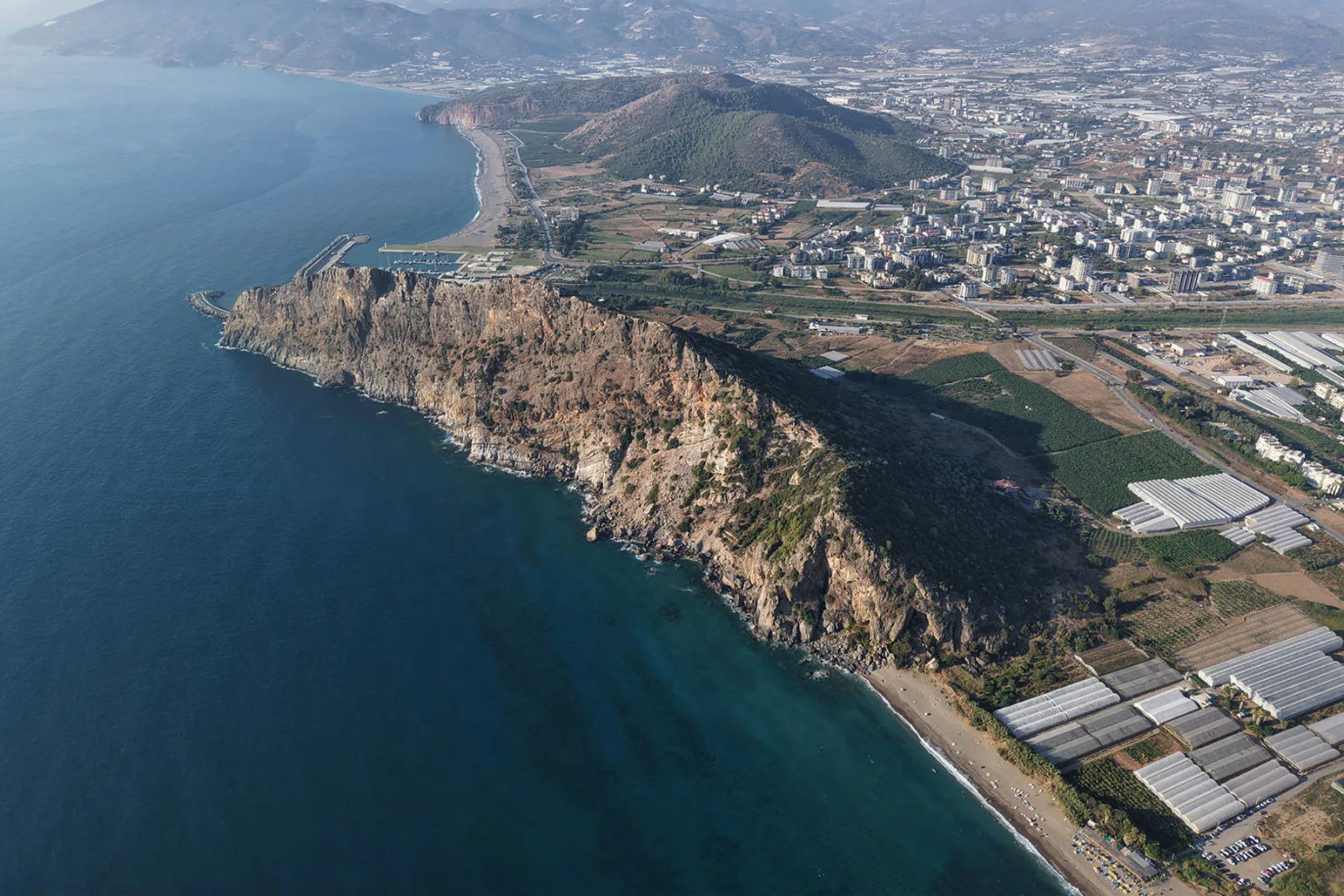
Alanya Alaaddin Keykubat University (ALKÜ) is continuing its excavation and surface survey work at full speed as part of the “Legacy for the Future” project to bring ancient cities to light. While work continues at the ancient city of Syedra, where ALKÜ serves as the excavation director, archaeological surface surveys have also begun at the ancient city of Selinus with the aim of bringing it to light, a project that will make a significant contribution to the ancient history of Gazipaşa. Conducted with permits from the General Directorate of Cultural Assets and Museums of the Ministry of Culture and Tourism, the 2026 field season of the Archaeological Surface Surveys of the Ancient City of Selinus and Its Surroundings took place in Gazipaşa from September 7 to 21. The survey, in which expert archaeologist Ferhat Alpaslan participated as a representative on behalf of the Ministry, was led by Assoc. Prof. Dr. Tuna Akçay, a faculty member at ALKÜ’s Faculty of Tourism and Chair of the Archaeological Surface Survey of the Ancient City of Selinus and Its Surroundings; and carried out by a field team consisting of philologist Dr. Sehriye Şahin, archaeologists Asena Köybaşı and Can Berk Meriç, architect Pelin Halisipek, Zeynep Başkök, and interior architect Gamze Arslan. Bringing together experts from diverse fields under a common scientific goal, the team worked diligently to document Selinus’s archaeological heritage using modern documentation methods and to leave a reliable knowledge base for future generations.
Assoc. Prof. Dr. Tuna Akçay, Head of the Archaeological Surface Surveys of the Ancient City of Selinus and Its Surroundings, provided information about the work carried out. In his briefing, Assoc. Prof. Dr. Akçay stated, “This season’s work focused primarily on the slope tombs, as well as the Acropolis, the defensive walls, the slopes overlooking the harbor, and the area surrounding the Temple of Trajan. As part of the work, the hillside tombs were divided into sectors; the location, architectural features, and state of preservation of each tomb were systematically recorded. Coordinate surveying, CORS measurements, topographic data collection, architectural drafting, photography, drone imaging, epigraphic documentation, and digital archiving were carried out in tandem. Thus, in addition to documenting the visible structures, a fundamental dataset was created to provide a comprehensive understanding of the city’s funerary culture, topography, transportation networks, and historical development. “This study has once again demonstrated that cultural heritage can only be preserved through the joint efforts of public institutions, scholars, and the local community,” he said. Akçay expressed his gratitude to the Ministry of Culture and Tourism, the General Directorate of Cultural Assets and Museums, and the Directorate of Excavations and Research for facilitating the research’s permitting and scientific oversight processes, ALKÜ Rector Prof. Dr. Kenan Ahmet Türkdoğan; the Alanya Museum Directorate for its on-site institutional coordination and museum support; Gazipaşa District Governor Hasan Uğuz for his close attention and coordination of the work; District Director of National Education Remzi Yetkin; Gazipaşa Mayor Mehmet Ali Yılmaz; Director of Public Works Bayram Ali Yaman; Director of Parks and Gardens Koray Taş; and Gazipaşa AK Party District Chairman Ramis Yiğit.
SELINUS: GAZİPAŞA’S SHARED HERITAGE AND FUTURE
Associate Professor Dr. Tuna Akçay noted that Selinus is not merely an archaeological site from the past, but an important asset capable of shaping Gazipaşa’s cultural identity and future. Akçay noted that scientific research and archaeological excavations to be conducted in the coming years will shed more light on Selinus’s history, adding that the data obtained can be shared with the public through museums, education, cultural routes, digital content, and exhibitions. Akçay also extended an invitation to schools in Gazipaşa, stating that they are prepared to organize presentations and conferences at schools to help students learn about Selinus through a scientific lens.
Source: Alanya Alaaddin Keykubat Üniversitesi (ALKÜ) · View original news →